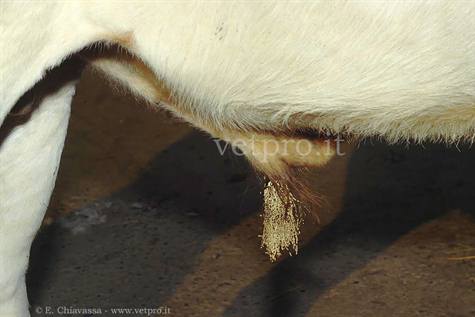
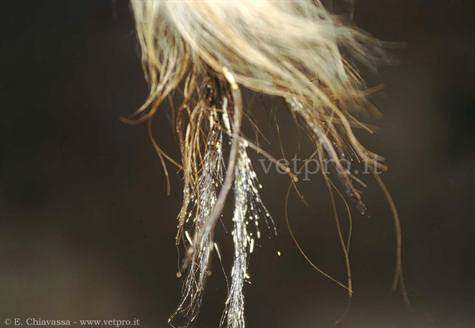
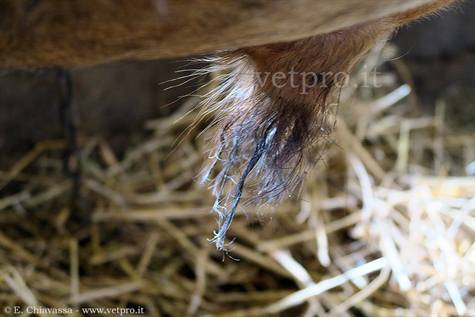
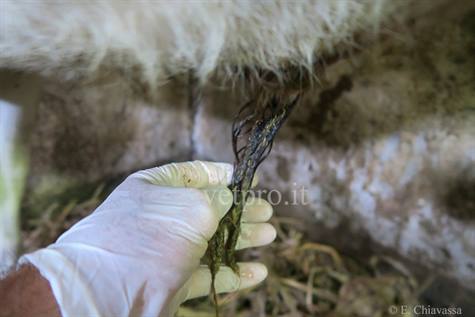
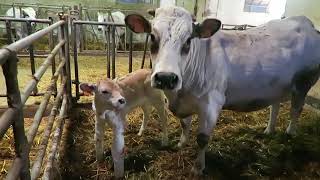
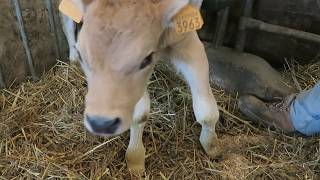
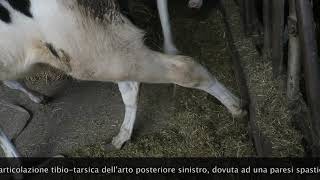
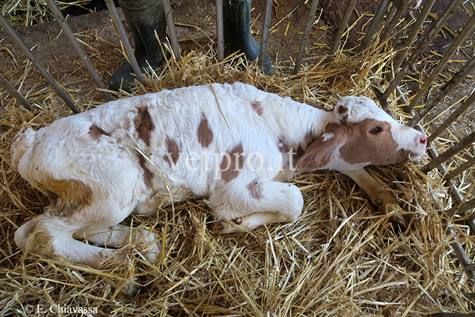
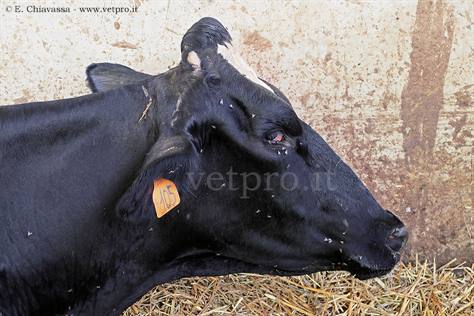
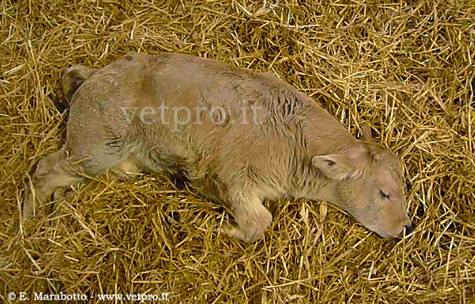
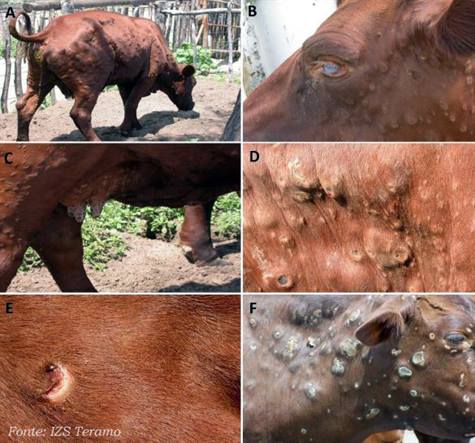
Piedmontese bull with Besnoitiosis in an advanced stage. Four other animals were affected on the same farm located in the province of Cuneo. For about a week, the animal presented an initial acute febrile phase characterized by depression, inappetence, tachypnea, nasal discharge, redness of the head, nostrils, neck, scrotum, and limbs, and lymphadenomegaly. As the disease progressed toward a chronic form, the skin gradually thickened, forming edematous, inelastic folds over much of the body.
Besnoitiosis is a parasitic disease with a subacute or chronic course, caused by a cyst-forming coccidian (Besnoitia besnoiti). Cattle serve as an intermediate host, becoming infected through the bite of hematophagous insects acting as mechanical vectors of the parasite. The definitive hosts remain unclear, although it is hypothesized that they may be wild carnivores. Reported in Italy for several years with sporadic occurrences, the disease appears to be increasingly spreading throughout Europe. No effective drugs or vaccines exist against this disease, making biosecurity measures essential.
Differential diagnosis: Sarcoptic or psoroptic mange, ringworm, dermatophilosis, bluetongue, malignant catarrhal fever, allergic reactions, photosensitivity, severe trace element deficiencies.
Diagnostic confirmation: histological examination of a skin biopsy reveals characteristic cysts of the genus Besnoitia spp.; serological testing (ELISA) reveals the presence of specific antibodies even in asymptomatic animals; PCR on skin biopsy.