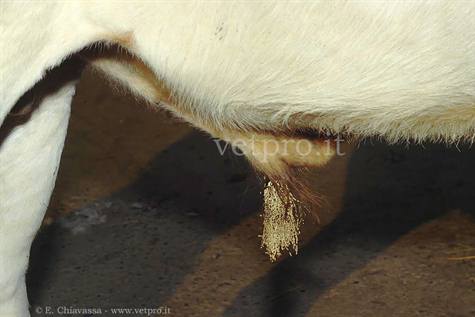
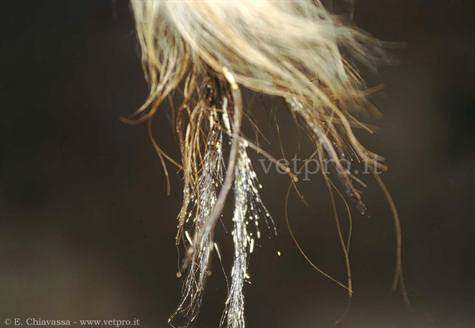
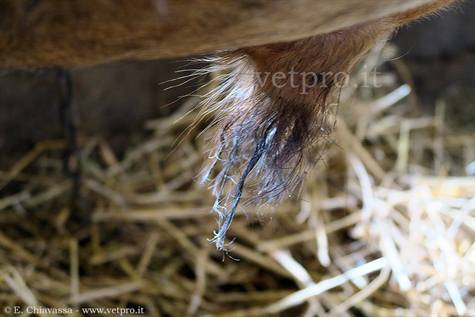
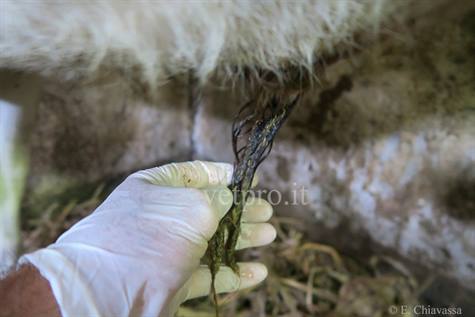
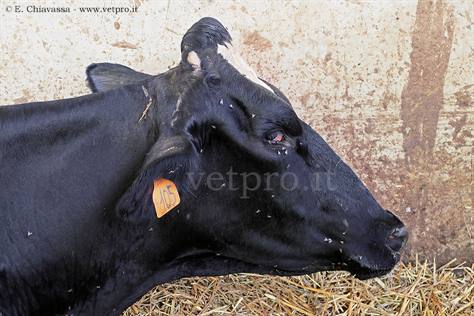
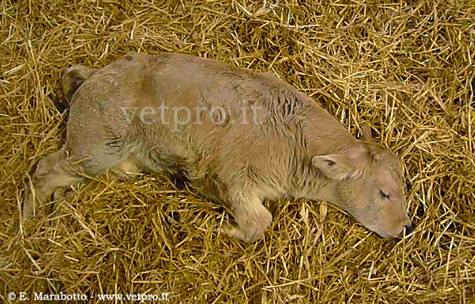
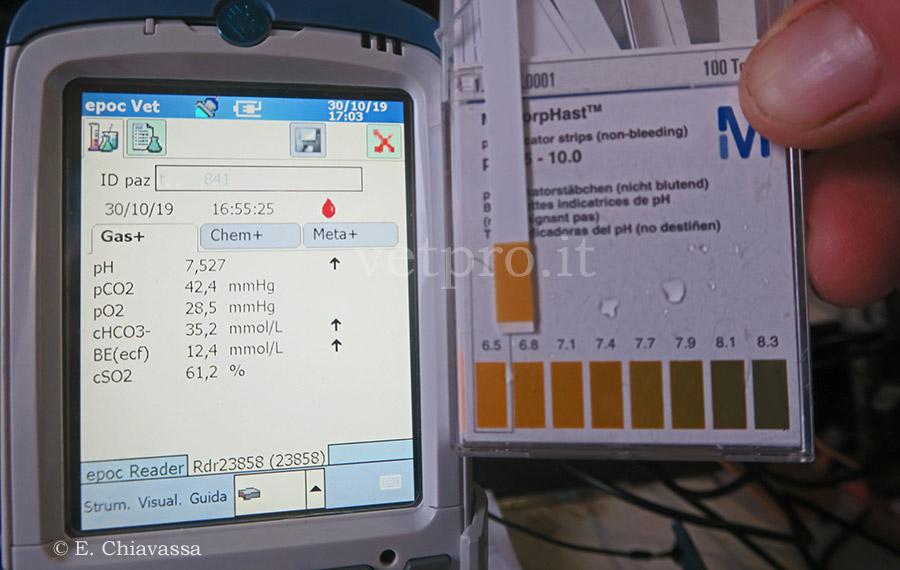
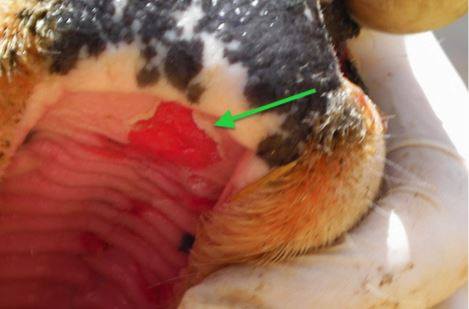
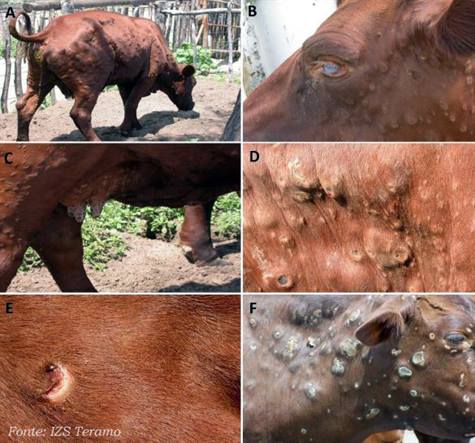
Holstein cow with subcutaneous edema in the head region, associated with vulvar edema (see next photo). Sporadic case, cause not determined.
Allergic edemas are due to the release of histamine or histamine-like substances resulting from the action of various allergenic factors: pollen, food, mycotoxins, insect bites, or drug administration.
Symptoms: Onset is rapid and generally sporadic, but in the case of reactions to vaccines, multiple animals may be affected simultaneously.
Edemas are predominantly localized subcutaneously in the head and vulvar lips and are very often accompanied by the passage of liquid feces. In some cases, ptyalism or nasal discharge is present.
Sometimes, diffuse cutaneous edemas can be observed in large body areas in the form of wheals or skin plaques.
In more severe cases, the edema may extend to the upper respiratory tract, resulting in stertorous breathing, followed by dyspnea and possible death of the animal due to asphyxiation.
Differential diagnosis: "osmotic" edemas, stasis edemas, phlegmons, actinomycosis/actinobacillosis, hematomas.
Therapy: Parenteral antihistamines (chlorpheniramine maleate)
Favorable outcome.