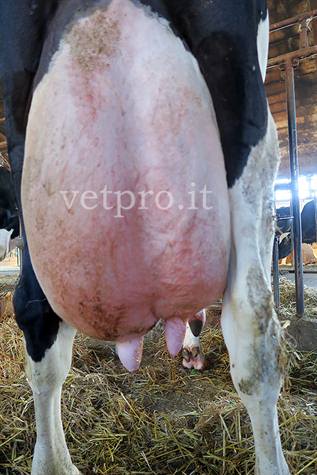
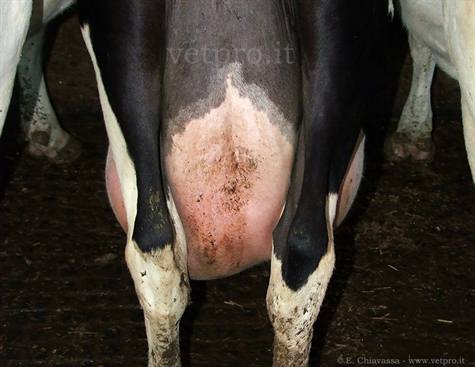
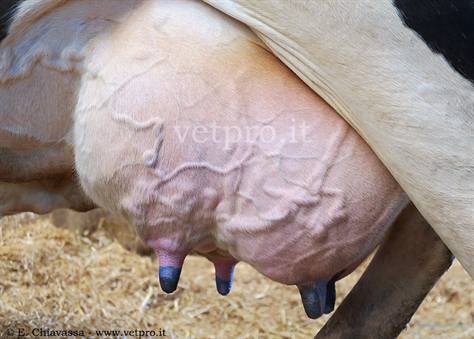
Gangrenous mastitis is generally associated with the ascending entry of Clostridium perfringens (a gram-positive anaerobic bacillus) into the mammary gland.
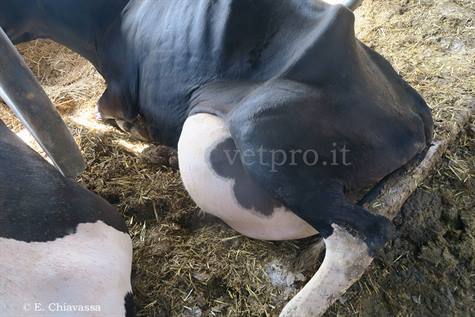
At the first symptoms, the quarter is swollen, not warm, and only mildly painful, with hemorrhagic areas present. On palpation, crepitus may be detected, and the secretion is generally reddish, foul-smelling, and mixed with gas.
Within a short time, the animal develops severe signs of toxemia, a compromised general condition, and death within 1–2 days (see video)
In some less severe cases, prompt therapeutic intervention can help halt the gangrenous process and save the animal, although the affected quarter will develop irreversible ischemic necrotic lesions in the following days as a result of venous thromboembolism.
From the first symptoms, it is very important to evacuate the contents of the affected quarter several times a day and infuse H2O2 into the udder to take advantage of oxygen release, which is detrimental to the anaerobic bacterium; this should be combined with systemic treatment using NSAIDs, fluid therapy with hypertonic IV solutions, and antibiotics (beta-lactams)
Differential diagnosis: traumatic lesions of the udder due to contusions or trampling.
VALUTAZIONE DEL LATTE DI MASSA
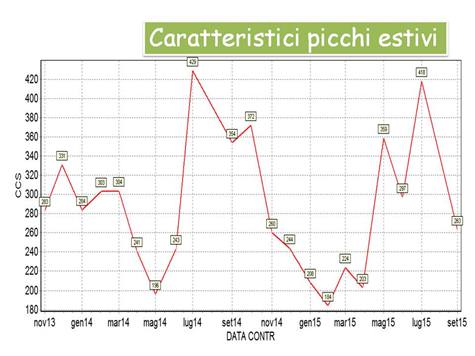
Andamento caratteristico che osserviamo in mandrie che presentano una prevalenza di mastiti sostenute da germi ambientali
View23 April 2026
VALUTAZIONE DEL LATTE DI MASSA
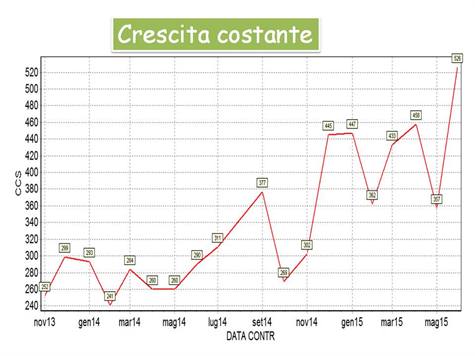
Conta cellulare che ci aspettiamo in presenza di infezioni da germi contagiosi. In questa azienda il 30% delle vacche risulta positiva a Prothoteca ad un esame batteriologico del latte di pool di quarti
View23 April 2026
VALUTAZIONE DEL LATTE DI MASSA
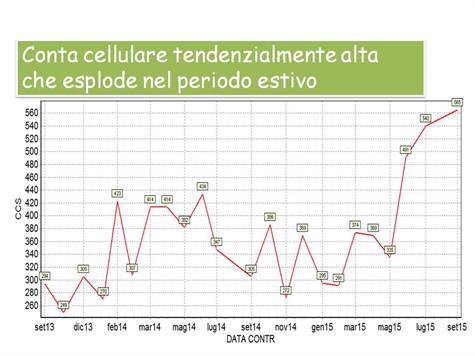
Ancora un'azienda con una grossa prevalenza di infezioni mammarie sostenute da germi contagiosi. Il 45% dei campioni di pool sono positivi a Stafilococco coagulasi+. Il problema non è mai stato affrontato
View23 April 2026
2007-2016 Rural Development Program: An Opportunity Seized for Mastitis Management
Read23 April 2026