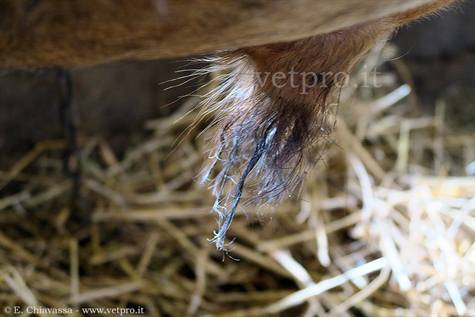
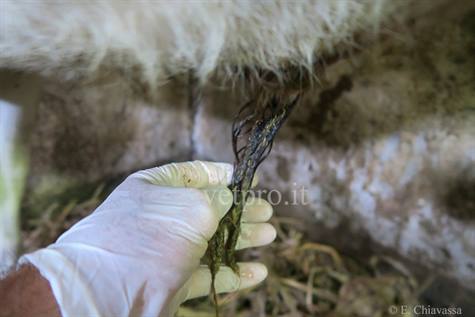
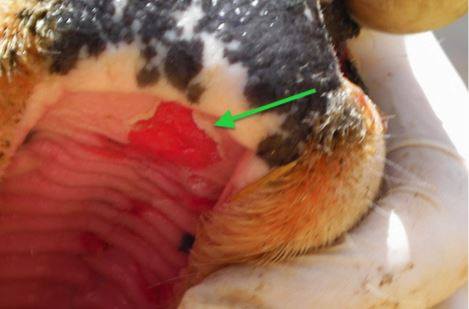
During the first weeks of life, calves can be affected by infection of the meninges (meningitis) or the brain (encephalitis) caused by the hematogenous spread of certain common bacteria, such as E. coli, Trueperella pyogenes, Streptococcus, Pasteurella. These disseminations generally originate from umbilical infections, bronchopneumonia, or enteritis, but also from the invasive disbudding of horn buds, as in the case of this Piedmontese heifer.
The pathology generally occurs in an acute form, with a fever, but the clinical picture can vary greatly depending on the extent and degree of the lesions and the time at which the examination is performed.
For etiological confirmation, it is necessary to resort to a bacteriological examination of the cerebrospinal fluid, collected from the occipital or spinal site; otherwise, at necropsy.
In most cases, the prognosis is poor. In the early stages of the pathology, IV bactericidal antibiotic therapy can be attempted, using drugs capable of crossing the blood-brain barrier at high dosages for at least 5 days, combined with NSAIDs and possibly anticonvulsants.
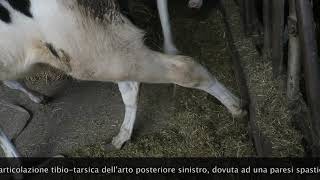
In the Video some characteristic symptoms related to the pathology can be observed: .